News » New Digital Humanities Project
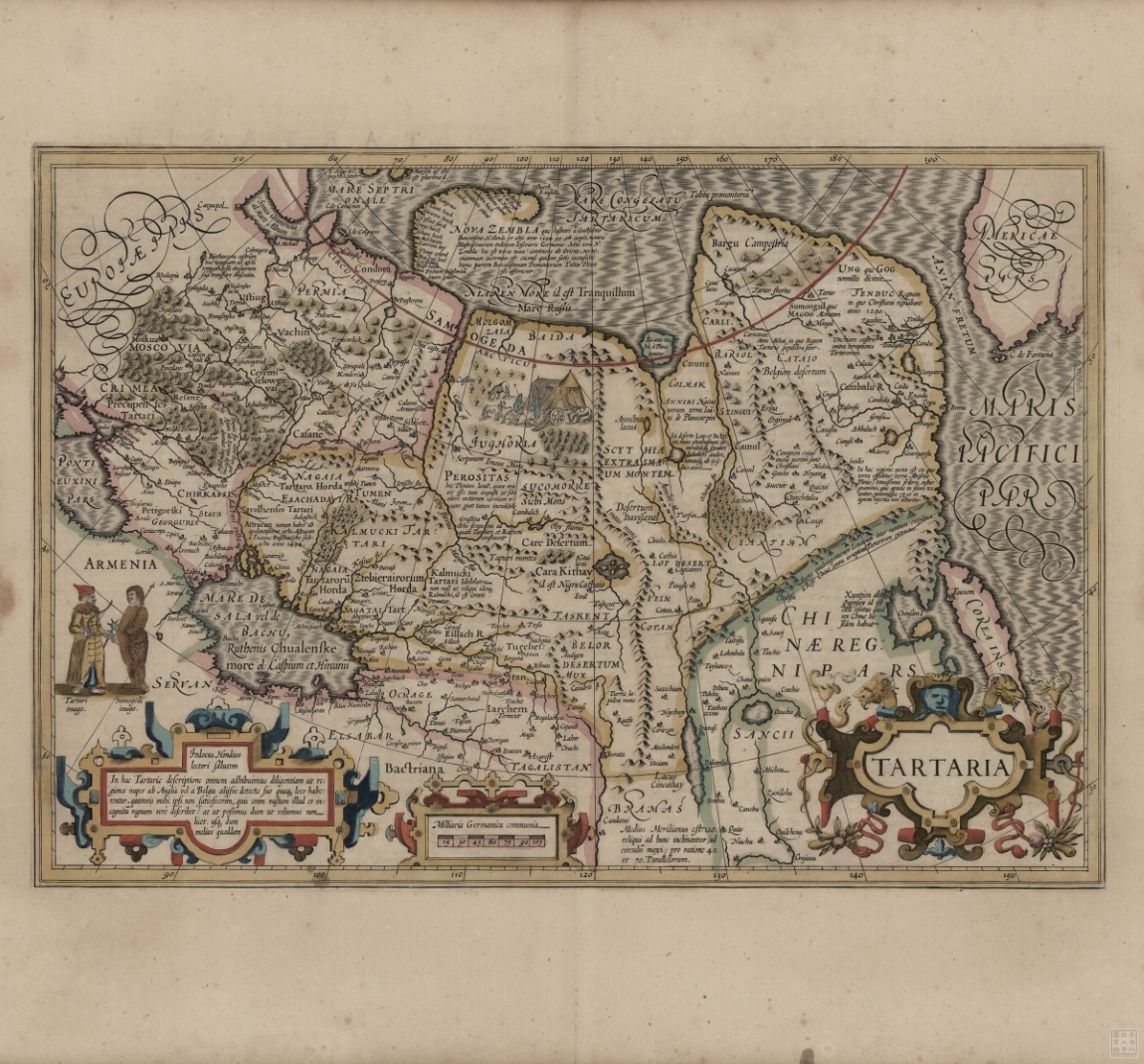
HKUST Research Team Advances Ancient Map Organization with World’s First Tartary Map Database
A research team led by Dr. Marco CABOARA, Senior Lecturer in the Division of Humanities at The Hong Kong University of Science and Technology (HKUST), has once again achieved a significant breakthrough in the field of ancient map research. Building on the highly acclaimed book Regnum Chinae: The Printed Western Maps of China to 1735 and the “MAPPA SINICA” digital humanities project, the team has made important progress in the organization of ancient maps of Tartary. This achievement has brought a large collection of precious historical materials back into the public scope, and expected to greatly advance the preservation and organization of Asian history and culture.
The project is the first large-scale research and collection project in the international academic community dedicated to maps of Tartary. It covers a vast region extending from the northern Caspian Sea, the Ural Mountains, and Central Asia to the Far East, encompassing diverse ethnic and cultural diversity. To protect this important cultural heritage of humanity, the research team has comprehensively organized the special collections of the Lee Shau Kee Library at HKUST, along with map collections from museums and art galleries around the world, and employed digital technology to bring these precious maps back to life.
With the support and funding of HKUST’s Digital Humanities Initiative, the project has been developed with the assistance of HKUST students from multiple interdisciplinary backgrounds. A platform for analyzing and organizing ancient maps using the latest artificial intelligence technology will also be released soon. This platform will not only support ancient map research, but will also greatly enhance students’ experience of learning about Asian history and culture through interactive technology.
In the future, Dr. Marco CABOARA will continue to utilize this platform to complete the organization of ancient maps of Tartary. He will also hold academic conferences with partners in Italy and mainland China to expand HKUST’s influence in the field of ancient map research. This project also provides a model for ancient map research in other regions, and demonstrates HKUST’s leadership in the field of Asian ancient map studies and digital humanities research.
The Digital Humanities Initiative is a joint effort between the Division of Humanities and the Lee Shau Kee Library at HKUST. Since its launch, the Initiative has supported over ten digital humanities projects. By leveraging digital tools and technologies, it aims to advance teaching and research, and enhance the visibility of HKUST humanities research and the Hong Kong digital humanities research community.