
Reading the Emotions of the Museum: A Sentiment and Word-Frequency Analysis of M+ Exhibit Labels
Digital Humanities Student Project (Fall 2025)
This project is a course project for HUMA5630 Digital Humanities
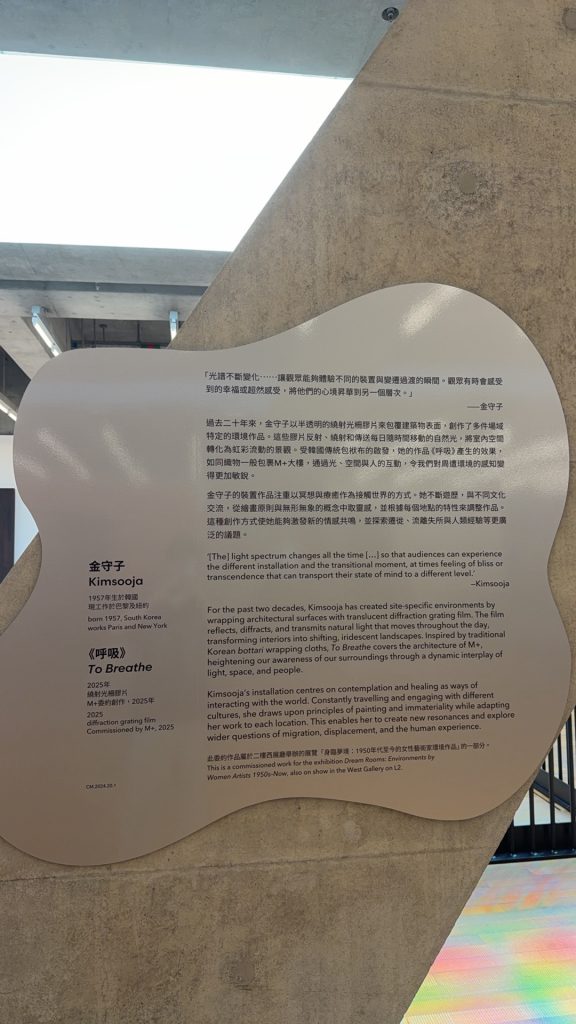
Museum labels at the M+ Museum
About This Project
In the digital era, museums are undergoing a significant transformation. They are shifting from being primarily knowledge-based institutions to becoming experience-centered spaces. In this evolving model, the emotional and interpretive experiences of visitors are increasingly emphasized, with exhibit labels serving as crucial mediators in shaping visitors’ perceptions. These labels do more than describe objects; they act as communicative tools that influence how visitors emotionally engage with the exhibits.
Despite this shift, much of the current academic research on museum texts has focused on translation accuracy, readability, or multimodal features, while the emotional dimension of linguistic expression has received limited attention. To address this research gap, our project titled “Reading the Emotions of the Museum: A Sentiment and Word-Frequency Analysis of Exhibit Labels” employs digital humanities methods to investigate the emotional expression embedded in Traditional Chinese exhibit labels. By examining how museums use language to convey sentiments and shape communication, this study aims to provide insights that may benefit curatorial practices and public engagement strategies.
The case study for this research is the M+ Museum, located in Hong Kong’s West Kowloon Cultural District. As a globally oriented institution dedicated to visual art, design, architecture, and moving images, M+ embodies the cultural expressions of the 20th and 21st centuries. Its scale, prominence, government backing, and emphasis on Traditional Chinese linguistic expression make it an ideal site for investigating how exhibit labels communicate emotion and meaning. The study centers on two key research questions:
(1) What emotional tones—positive, neutral, or negative—are present in the exhibit labels at M+ Museum?
(2) What do word frequency patterns and lexical choices reveal about the museum’s thematic priorities and communicative disposition?
Data-Driven Methodology
To address these questions, a rigorous and data-driven methodology was adopted. The research team collected a total of 58 Traditional Chinese exhibit labels from the M+ Museum. The analysis involved three digital tools.
- First, Python IDLE was used to conduct quantitative word-frequency analysis, allowing for the identification of recurrent lexical patterns and descriptive or affective words.
- Second, Ctext was employed to generate word clouds, visually highlighting high-frequency words and revealing essential themes and dominant concepts in the exhibit texts.
- Finally, sentiment analysis was conducted using the Baidu NLP Sentiment Analysis API through Python Spyder.
Each exhibit label was assigned a sentiment probability score ranging from 0 to 1.0 and subsequently categorized into five levels: Very Negative, Moderately Negative, Neutral, Moderately Positive, and Very Positive. This step enabled a systematic categorization of emotional tones and provided a more nuanced understanding of the emotional landscape of museum communication.
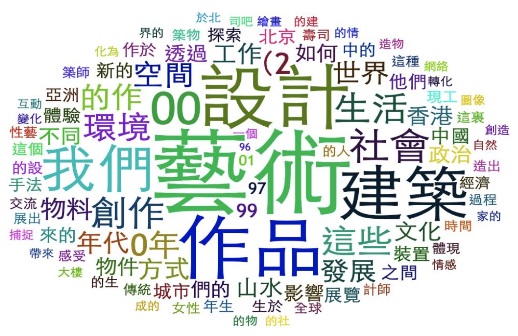
Figure 1. Word Cloud
Key Findings: Lexical Patterns and Themes
The analysis of the M+ Museum exhibit labels revealed compelling patterns regarding the institution’s thematic focus. Through word frequency analysis and word cloud visualization, several terms emerged as dominant: “Work” (作品), “Art” (藝術), “Design” (設計), “Architecture” (建築), “Society” (社會), and “Culture” (文化).
These high-frequency terms reflect M+ Museum’s strong emphasis on creativity, cultural representation, and social context. Furthermore, the prominence of words such as “We” (我們) and “Life” (生活) underscores a human-centered, collective tone. This suggests the museum is intentionally inviting visitors to form an emotional connection with the exhibits, moving beyond dry academic descriptions.
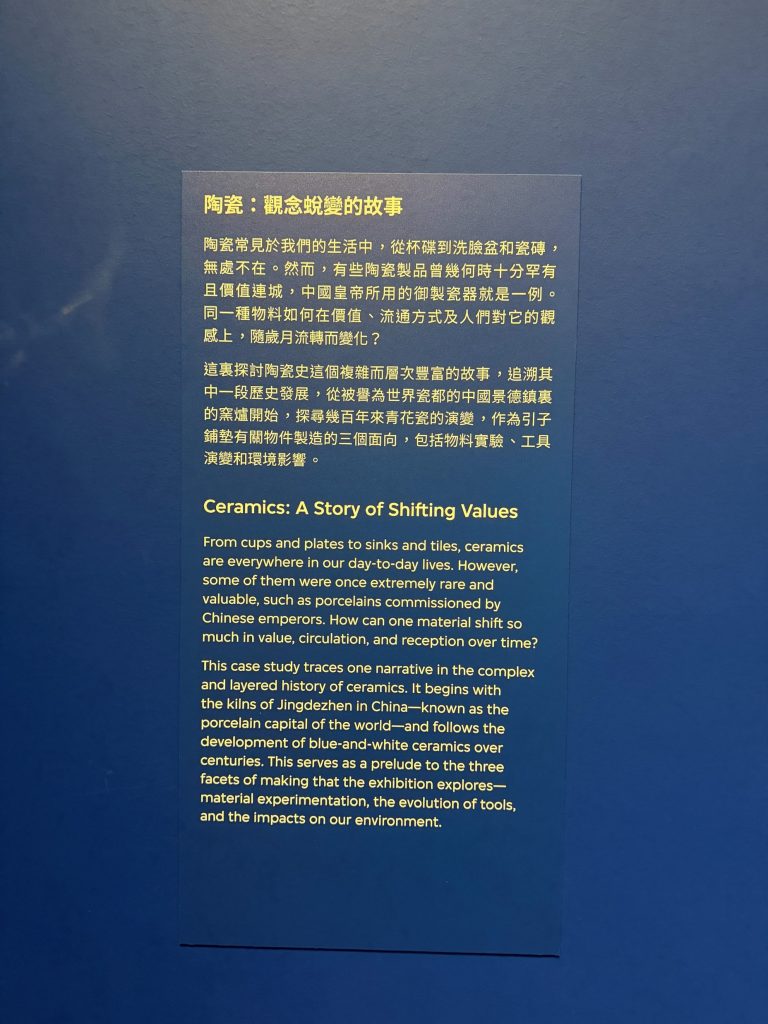
Museum labels at the M+ Museum
Sentiment Analysis Results
The sentiment analysis provided a clear picture of the emotional inclination of the museum’s texts. Contrary to the traditional expectation of neutral and objective museum language, M+ labels show a distinct positive bias.
- Very Positive: 49 labels (84.5%)
- Very Negative: 5 labels (8.6%)
- Neutral: 1 label (1.7%)
- Moderately Positive: 1 label (1.7%)
The data indicates that nearly 85% of the labels fall into the “Very Positive” category. Positive emotions are generally conveyed through words expressing appreciation and encouragement. Conversely, the few negative labels were typically associated with historical struggles or social confrontations. Overall, the language is inclusive and emotionally engaging rather than strictly objective.
Conclusion
This study demonstrates the value of digital humanities in revealing the “emotional landscape” of museum communication. The results suggest that M+ Museum prioritizes an experiential, visitor-centered approach. By understanding how lexical selections and sentiment influence engagement, curators can design more emotionally evocative texts. Ultimately, these data-based analyses serve as effective instruments to elucidate linguistic expression and strengthen the cultural and emotional connection between the museum and its visitors.
Wei HUANG
MA Chinese Culture
Guanyi HU
MA Chinese Culture
Yushi YANG
MA Chinese Culture
Wenzhou HE
MA Chinese Culture
Xinpei YANG
MA Chinese Culture
GitHub Repository
Please find the detailed code and project documentation at the link below.